
Brickwork Pricing in 2026: What Drives the Cost and Where the Money Goes
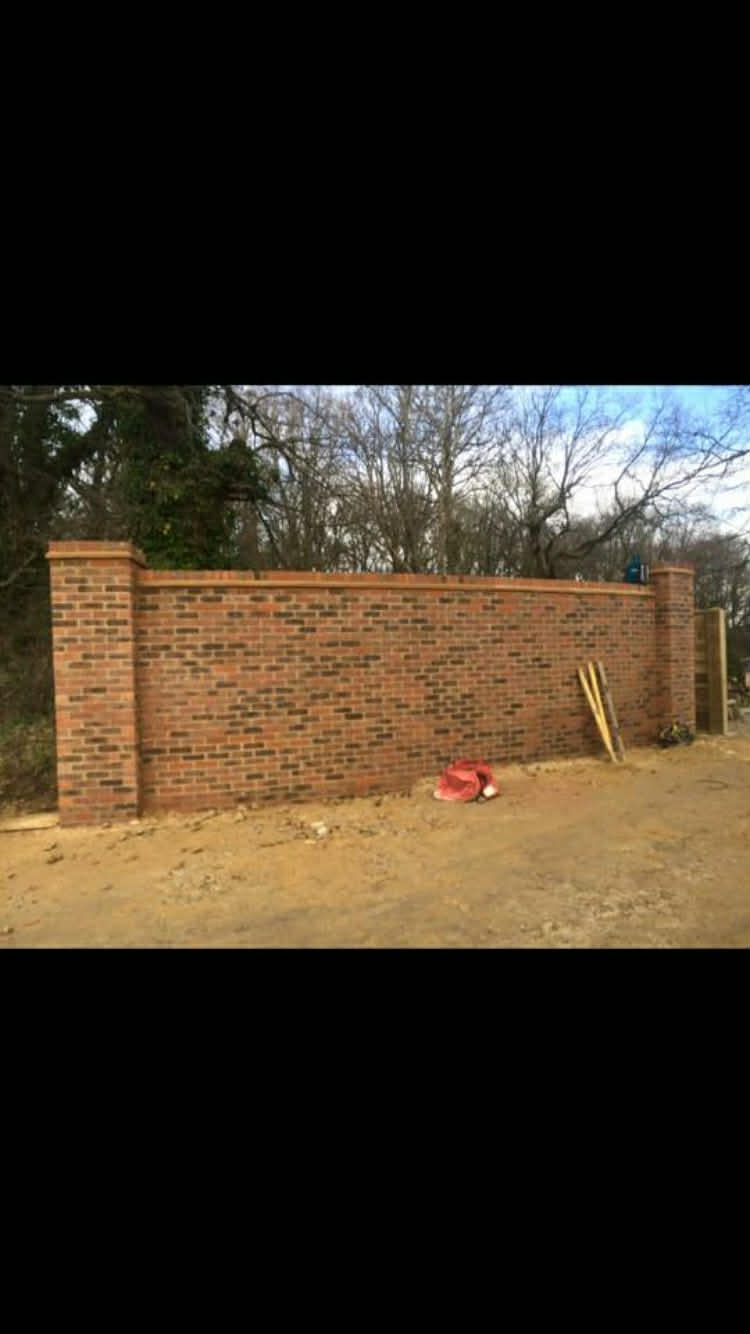
Labour, materials, foundations, and access all affect the final price. Here is a transparent look at how brickwork is costed in Kent.
Brickwork pricing is not straightforward. A homeowner asking "how much per square metre?" is asking a question with about fifteen variables embedded in it. Two identical-looking garden walls can differ in price by 40% depending on ground conditions, brick choice, access, and height.
What Drives the Price
- Brick cost: A standard Ibstock facing brick costs roughly 50p to 80p per unit. A handmade brick from Michelmersh or a reclaimed London Yellow can be 1.50 to 3.00 per unit. A garden wall uses approximately 60 bricks per square metre of finished face.
- Mortar: A 1:1:6 (OPC:lime:sand) mortar costs roughly 120 to 140 per tonne of dry materials. Lime mortar for period work is around 180 to 220 per tonne.
- Foundations: A 450mm-wide trenchfill foundation at 1.0 metre depth costs roughly 50 to 80 per linear metre for the concrete alone, before excavation.
- Labour: A competent bricklayer and labourer in Kent typically charge 350 to 500 per day as a pair. Output depends on the complexity of the work.
Rough Guides for Common Projects
These figures are indicative for Kent in 2026 and assume standard materials and reasonable site access:
- 1-metre high garden wall in facing brick: 250 to 450 per linear metre (including foundations).
- Repointing in cement mortar: 35 to 55 per m2. Lime mortar: 55 to 85 per m2.
- Brickwork element of a single-storey extension: 4,000 to 12,000 depending on size and specification.
We provide free, detailed quotations for every project. No verbal estimates, no vague ranges. Get in touch to arrange a site visit, or see our guide to choosing insured contractors.